
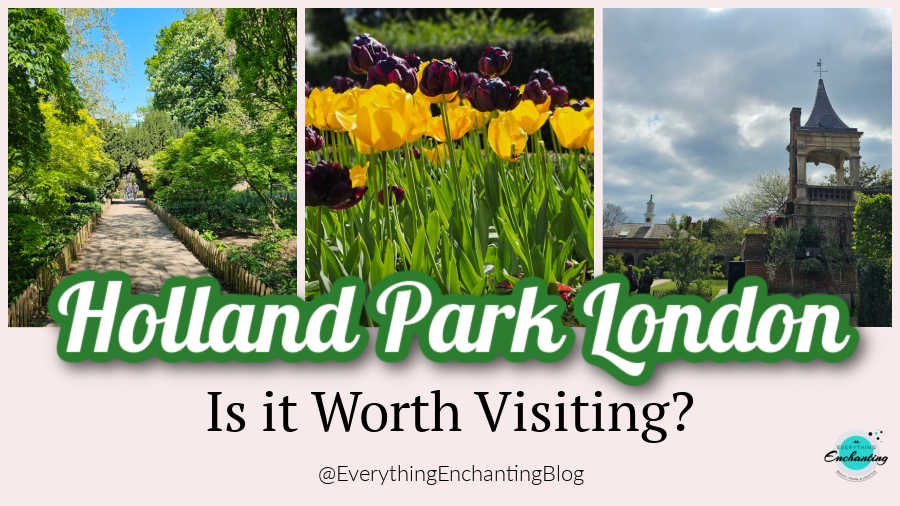
Spring is the best time to visit gardens and flower fields in the UK. Recently, we visited Holland Park, one of London’s most peaceful green spaces and home to historic Holland House ruins, authentic Japanese gardens and wildlife. If you are curious to know more about this FREE, Grade II-listed historic park in London, keep scrolling!
Holland Park London Travel Guide -Best Gardens, Walks & Visitor Tips:
If you’re planning a visit to Holland Park in 2026, here’s a complete guide based on our experience.
Location & Opening Hours of Holland Park:
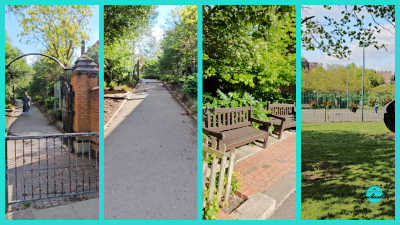
Holland Park (55 acres approx.) is situated between Notting Hill, Kensington High Street, Shepherd’s Bush.
📍 Location: Kensington, Royal Borough of Kensington & Chelsea, London, UK.
📮 Postcode: W8 / W11 area.
⏰ Daily: 07:30 AM – Dusk 08:30 PM (seasonal closing time).
🚪 Gates may close 20–30 minutes before dusk.
How to Reach Holland Park London (From Milton Keynes)
We had some official work in London, so we travelled early in the morning, around 8:00 AM. From Milton Keynes Central station, we boarded an Avanti Express train and reached Euston station within 34 minutes. Thankfully, our work ended by 9:30 AM, so we booked an Uber and reached the park in about 45 minutes.
🚄 Train (Fastest):
- Milton Keynes Central → London Euston (~30–40 mins)
- Then Underground (Central Line) → Holland Park Station
🚇 Nearest Tube Stations:
- Holland Park (Central Line) ~5 min walk
- High Street Kensington (Circle/District) ~10 min walk
🚌 Bus routes: 9, 27, 28, 31, 94, 148, 390
🚗 Parking: Limited on-site pay-and-display parking.
Entry and Access:
There are multiple entrances to the park, and entry is free. Paid activities include seasonal opera performances and special events or exhibitions.
Holland Park/Holland House Ruins – History & Significance:
The entire park was once the private estate of Holland House. Originally known as Cope Castle, it was built in 1605 by diplomat Sir Walter Cope in the Jacobean country house style.
It later became the residence of the Earls of Holland and was eventually owned by the Fox family, turning it into a major political and intellectual salon. The mansion was renamed “Holland House” after Lady Rich, the wife of the Earl of Holland, inherited the property.
This historic house once hosted aristocratic balls attended by royalty. However, on 27 September 1940, it was hit by incendiary bombs during the Blitz in World War II. Most of the mansion was destroyed, leaving only fragments, including the east wing and parts of the ground floor and south façade. The famous library partially survived despite heavy damage.
The ruins are now integrated into landscaped gardens and form a dramatic backdrop for Opera Holland Park (open-air theatre). In 1952, the London County Council purchased the estate and opened it to the public. Today, it is managed by the Royal Borough of Kensington and Chelsea.
Holland Park is one of London’s rare examples where war damage has been preserved rather than hidden. It is also home to the famous Japanese Kyoto Garden, Dutch Garden, and wildlife such as free-roaming peacocks, fish, squirrels, and birds. This is exactly why it had been on my “best spring spots in London” list for a long time.
ALSO READ: Tulleys Tulip Fields Hertfordshire Review
Things to see and do inside Holland Park London (Full Guide):
Holland Park encompasses 55 acres and is functionally divided into three distinct zones:
- The North: Dedicated to tranquil woodland and wildlife conservation.
- The Centre: Houses the Grade I listed ruins of Holland House and the formal garden areas.
- The South: Contains the park’s formal sports and recreation facilities.
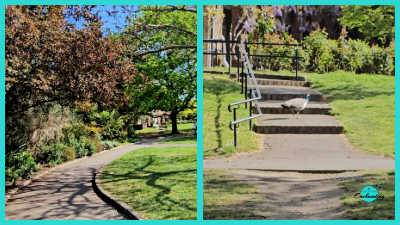
There are around seven entrances. We entered via Abbotsbury Road South Gate and were immediately greeted by a beautiful peacock.
Near the south entrance, there is a small, quiet garden with seating areas for relaxation. This area also includes sports and recreational facilities.
As expected, the park is surrounded by lush greenery, especially vibrant during spring.
Holland Park London Japanese Gardens Guide – Kyoto & Fukushima:
This traditional Japanese landscape garden is hailed as the most iconic spot in Holland Park! Opened in 1991 as part of the Japan Festival in London, it was a gift from the Kyoto Chamber of Commerce as a symbol of UK–Japan friendship.
Kyoto Garden is one of the most authentic Japanese gardens in the UK. The garden features a koi pond with stepping stones, a tiered waterfall, Japanese maple trees (Acers), and traditional stone lanterns and rock arrangements.
During spring, cherry blossoms and buckthorn trees bloom beautifully. In autumn, the garden transforms with stunning foliage. So yes, spring and autumn are the best seasons to visit!
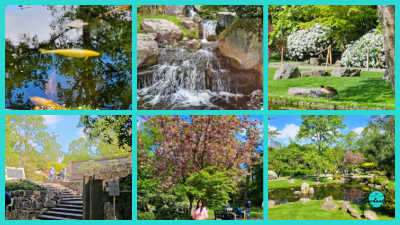
There are seating areas beneath cherry blossom trees and a small bridge crossing the pond, offering excellent views of the waterfall. The circular walking path allows visitors to explore the garden from multiple angles.
We spotted koi fish, ducks, squirrels, and birds. If you’re lucky, you may also see peacocks roaming nearby 😍.
Dogs are not allowed inside the Japanese gardens, although they are permitted in other parts of the park.
A short walk from Kyoto Garden leads to the Fukushima Garden, opened in 2012 as a tribute to the victims of the 2011 Fukushima disaster.
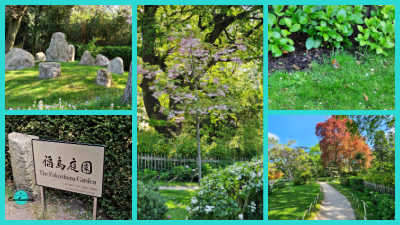
Fukushima Garden features a minimalist design with open lawn space and carefully placed rocks and a single stone lantern. The garden is simpler and quiter than Kyoto and dotted with blossom trees, maple trees and other plants.
These Japanese gardens feel surprisingly secluded despite central London location. Had I not watched the viral videos about this place, I wouldn’t have known such gardens even existed in London! If you like spending time amid natural sounds and meditative space, you’ll surely enjoy these gardens 😍.
ALSO READ: A Day Trip to Hitchin Lavender & Sunflower Farm From Milton Keynes (Review)
Holland Park London Woodland Walks Guide (Northern Section):
Holland Park doesn’t just feature formal gardens. It also offers peaceful woodland walks in its northern section.
You can explore:
- Chestnut Walk
- Lime Walk
- Azalea Walk
- Arboretum trails
While exploring the trails you might encounter Squirrels and urban woodland species, occasional fox sightings and peacocks. These woodland trails add a wild, less-manicured contrast to formal gardens and are ideal for slow walks and exploration.
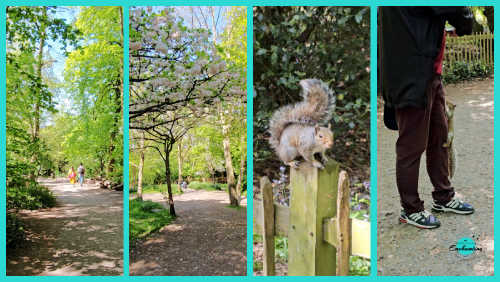
We met a super friendly squirrel along Chestnut Avenue woodland trail. Feeding wildlife is not allowed, so we had to politely decline its request for food.
Following the quiet woodland trail, we arrived at a pond where the bronze statue of Henry Richard Vassall-Fox, the 3rd Baron Holland, is positioned on a stone plinth. The park takes its name from this influential Whig politician, whose tenure during the early 19th century transformed the estate into a significant political and social hub.
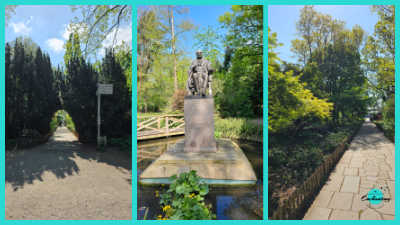
Right opposite to the sculpture, there is a narrow lane that leads you to the Opera Holland Park, Dutch Garden and Holland House and Terrace. The path is flanked by several trees and ornamental plants on both sides and ends to a huge field.
Holland Park London Dutch Garden (Tulips) Guide:
Located near Holland House ruins, Dutch garden serves as one of the most popular photographic spots in the park during the spring months. In my previous London’s best Tulip spots video (posted on social media), I mentioned about this garden. You can check it here.
This formal European-style garden features structured layouts and seasonal flower beds. This area is maintained by the Royal Borough of Kensington and Chelsea to preserve its historic, formal aesthetic.
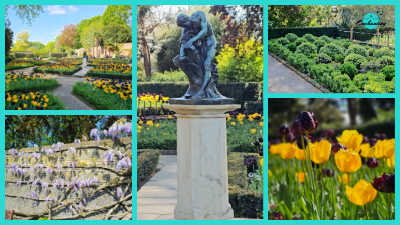
The gravel paths allow visitors to walk through and view the gardens from different angles. The wall is lined with wooden benches, where visitors can sit and view the garden.
The Dutch garden is more open and social compared to Holland park’s Japanese gardens. This Spring season, the garden beds are meticulously planted with a high-contrast combination of vibrant yellow and deep, near-black tulips. I love red, pink and white tulips, but dark purple to almost black tulips look equally gorgeous! Oh, the entrance gate is also covered by stunning wisteria flowers.
Beyond the vibrant, geometric symmetry of the Dutch Garden’s tulip beds, you will find the 19th-century bronze sculpture of Milo of Croton, depicting the ancient Greek athlete’s tragic myth. The sculpture portrays how his hands were trapped in an oak tree he attempted to split, leaving him vulnerable to predators. The sculpture was donated by The Friends of Holland Park on July 28, 2003.
The Dutch garden blends history, horticulture and symmetry beautifully. The garden frames the historic Holland House ruins and features contrasting colors against stone architecture. The best time to visit Dutch garden is late spring and summer (peak floral displays).
ALSO READ: My Overnight Stay at Kolkata Airport Retiring Room (Review)
Iris Garden & Holland House Ruins:
A short walk from the Dutch garden and you’ll enter the Iris garden, another beautiful formal English garden of Holland Park, well maintained by Royal Borough of Kensington and Chelsea.
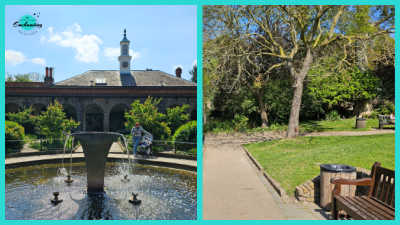
At the centre of the garden, there is a fountain set within a circular pool, which is bordered by a stone-paved curved pathway and black iron railings framing the flower beds.
The fountain sculpture is named as the “Sibirica”, created by renowned British artist William Pye and donated to the Royal Borough of Kensington and Chelsea by The Friends of Holland Park in 1999. Its design features a distinctive, flared bronze funnel structure from which water flows.
The Iris garden is framed by the historic Holland House ruins. From here, you get a panoramic view of Holland House ruins, including its red-brick arcade, arched windows, and tower structure 😍.
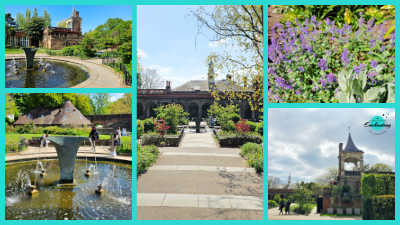
The Clock Tower, originally built as the stables for the Holland House estate in 1638, this historic structure has lived many lives. In the 19th century, it was transformed into a glittering “Summer Ballroom,” hosting salons for the era’s most famous literary and political figures. Today, it stands as a celebrated architectural centerpiece of the park.
Much of the original mansion was destroyed by an incendiary bomb during the Second World War, leaving only the east wing and ground floor facade intact. A remaining section of this terrace is utilized as a distinct backdrop for Opera Holland Park.
This is a prime example of the park’s successful blend of 17th-century architecture and 21st-century landscape design to modernize the space 🩷.
The park grounds surrounding the fountain and ruins are well-maintained and feature mature trees, well-manicured hedges, expansive lawns, wooden benches and shrubbery, reflecting the formal garden style of the area.
ALSO READ: A Visitor’s Guide to Natural History Museum London
Holland Park London Café & Food Options (Stable Yard Area):
Adjacent to the Iris Garden and the clock tower is the cafe and food zone.
The café is located in the central area of the park, near the Stable Yard and is part of the remaining Grade I listed Holland House ruins featuring a charming outdoor seating and service area.
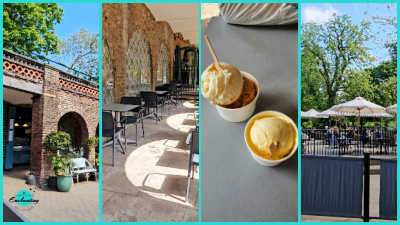
The Holland Park Café, located near the Stable Yard, offers a relaxed space for brunch and refreshments. One of the arched bays serves as an open-air counter (ice cream shop) where visitors can order. We had vanilla and caramel chocolate ice creams. The ice creams were delicious 😋 !
The indoor Café seating area is furnished with several small, square black tables paired with matching modern black chairs, arranged along a paved stone terrace. The interior of the arches is decorated with a trellis-patterned wallpaper (mural) featuring green leaves and purple grape clusters, which is protected by clear glass or acrylic panels.
The terrace in front of the arches is decorated with various potted plants and shrubs. The terrace is a spacious, open-air patio paved with light stone and neatly enclosed by dark metal railings creating a clear boundary between the dining space and the general park pathways. It is filled with numerous small, round tables and matching chairs, designed for a relaxed, “al fresco” dining experience.
Plus, large, cream-colored parasols are strategically placed throughout the seating area, providing shade for guests while they enjoy the park’s atmosphere. This is arguably the best place in the park to recharge ❤️!
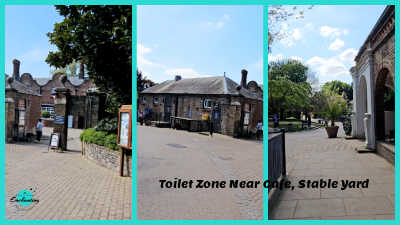
The Stable Yard was built in 1638 and is a rare surviving part of the original Jacobean estate’s infrastructure. These buildings, which originally housed horses for the Holland House estate in the 17th and 19th centuries, now serve as offices and facilities for the park staff.
You can find the toilet facility at the Stable Yard area. The toilets are clean and neat.
ALSO READ: Things to know before visiting the Sheikh Zayed Grand Mosque, Abu Dhabi
Public Art & Sculptures at Holland Park:
Boy with Bear Cubs:
There is a beautiful sculpture right outside the Cafe zone. “Boy with Bear Cubs,”a notable piece of public art located within Holland Park. John Macallen Swan (1846–1910), a British sculptor and painter renowned for his powerful and anatomically detailed depictions of animals. The work captures a dynamic moment between a young figure and two bear cubs, demonstrating Swan’s signature ability to blend human and animal forms with naturalistic movement.
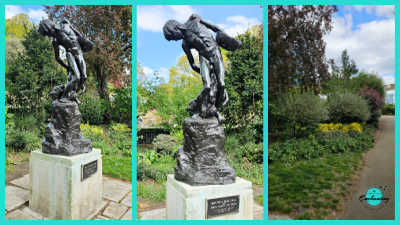
This artistic piece is on loan from the Tate Gallery, meaning you are literally walking through an outdoor, curated exhibition 😉! Also, artist John Macallen Swan was a member of the “New Sculpture” movement, which moved away from rigid, neoclassical styles toward more energetic and lifelike compositions.
Giant Chess Set:
There is also a recreational area within the park, featuring a large, black-and-white tiled checkerboard set directly into the lawn, which is designed for playing outdoor games such as giant chess.
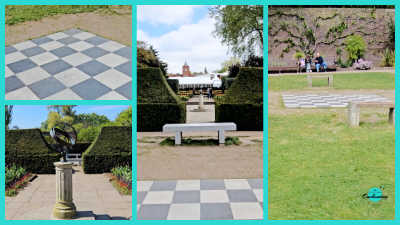
There are traditional wooden park benches placed against the brick wall which is adorned with climbing vines or espaliered plants. Surrounding this central chess set feature are low, simple stone benches that provide seating for visitors.
From here, you can view the distant Dutch Garden tulips, a white marquee-style tent flanked by trees and greenery or can enjoy a stroll through the lush garden through a gateway framed by two tall, dark green hedges. There is a sundial positioned right in the middle of the path. This spot makes a wonderful space for photography!
The entire area is framed by manicured hedges and lush trees, contributing to the peaceful and well-maintained atmosphere characteristic of the park’s grounds.
Annunciation Sculpture, Northern Woodland:
After a few photo sessions, we moved toward the Ecology Centre. On our way, we spotted a stunning contemporary bronze and granite sculpture titled “Annunciation,” created by the artist Andrew Burton, a British sculptor.
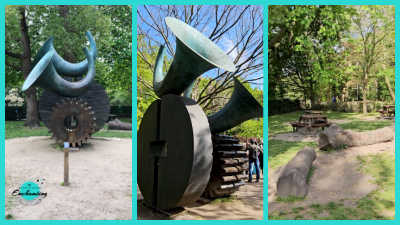
The work is composed of bronze and South African granite. The sculpture, a part of Holland Park’s “Permanent Outdoor Gallery,” features two prominent, horn-like or trumpet-shaped bronze elements extending from a large, gear-like central structure.
While the ruins tell the story of London’s past, pieces like Annunciation represent its modern artistic soul. This piece, along with the Sibirica fountain and the Boy with Bear Cubs statue, establishes Holland Park as one of London’s premier destinations for public art ❤️.
There is a classic circular wooden picnic table with attached benches, set on a small paved base near the sculpture. This specific tranquil spot, surrounded by tall, mature trees and dense green hedges, is ideal for visitors looking for a quiet break away from the busier formal gardens and the main house ruins.
ALSO READ: 7 Best Places To Visit In The UK In Spring
Holland Park Ecology Centre, SafeStay Hostel – Northern Semi-wild Woodland:
The Ecology Centre is situated within the northern part of Holland Park. The building was opened in September 2013 and is nestled among dense tranquil woodland, surrounded by tall, mature trees and lush green undergrowth. It is operated by the Royal Borough of Kensington & Chelsea and focuses on environmental education and sustainability.
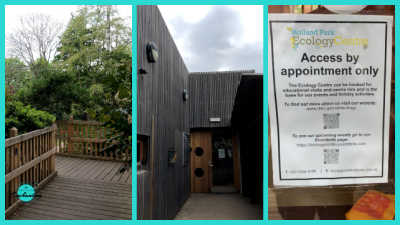
The Ecology Centre features a contemporary, sustainable design that allows it to blend seamlessly into its wooded environment.
The pathway leading toward the Holland Park Ecology Centre is a wide, flat, and paved walkway made of light-colored stone or concrete tiles. On the left side, the path is bordered by a metal railing that separates the walkway from the surrounding natural areas.
A wooden signpost is positioned at the edge of the path, providing clear directional information for visitors navigating the woodland area. Dense undergrowth and vibrant green foliage flank the path, emphasizing the nature-led atmosphere of the ecology zone.
A black informational chalkboard is mounted to the left of the entrance, used for detailing daily activities or environmental notes. The board contains two columns listing various bird species recently spotted in the park.
When we visited, the centre was closed. The sign on the door clearly states that the centre is open for access by appointment only. It can be booked for educational visits and centre hire, and it serves as the base for various events and holiday activities. The activities and programs include: Forest School sessions (hands-on outdoor learning), Wildlife and habitat exploration, Nature wellbeing programs and Public workshops and seasonal events.
Holland Park Ecology Centre acts as a bridge between historic landscape and modern sustainability and encourages visitors to see the park not just as a garden, but as a living ecosystem!
The northern woodland area near the Ecology Centre is a hub for environmental education and wildlife conservation. The area is a prime spot for birdwatching!
A little walk from the area led us to the walkway near Dutch Garden. We didn’t enter again the garden obviously! We walked straight toward the Duchess of Bedford gate to exit the park. On our way, we spotted beautiful wild flowers and the youth hostel.
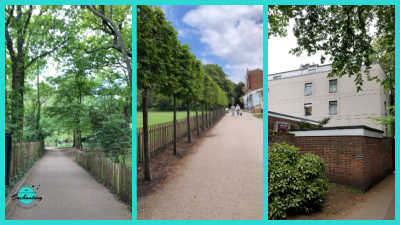
The Safestay London Holland Park building is one of the most historically significant hostels in the city, occupying the preserved sections of the original Grade I listed Holland House (formerly known as Cope Castle). A long, rectangular reflecting pool situated alongside a section of the historic Holland House ruins. If you are looking for a chic hostel to stay in London, this is worth a try!
ALSO READ: A Visit To The World’s Tallest Building, Burj Khalifa, Dubai Tips
Conclusion: Is Holland Park Worth Visiting?
We had an amazing time at the park exploring and learning all at the same time 😍! We also noticed children learning about insects just a few steps away. They came in groups with their respective teachers. There are about two adventure playgrounds aside from other sports and recreational facilities as well! There are multiple wooden benches around the park to relax and recharge. So I believe, this hidden gem in London is a great edutainment day-out spot for all the families with kids.
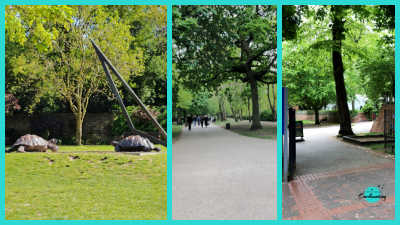
Holland Park offers a rare mix of history, nature, and cultural spaces. From formal European gardens to Japanese landscapes, from historic ruins to woodland trails, it truly feels layered ❤️.
After spending nearly six hours exploring, we exited via Duchess of Bedford Gate and headed for lunch at Zaika, Indian Restaurant. Stay tuned for my review!
Holland Park is more than just a historical site. It’s a living, evolving green space in central London, perfect for both visitors and locals 😍.
YOU MAY ALSO ENJOY READING THESE POSTS 👇🏻
- 15 travel essentials to carry for a winter trip
- 11 best important travel safety tips you must know!
- 6 top-rated passport holders and travel wallets
- 6 Best National Parks in the UK to Visit This Summer
- Park Plaza Victoria London Hotel Review
- Park Rotana Hotel, Abu Dhabi Review
- Safari Spots In India That Are Worth Visiting
- A Walk Around Fred Roche Gardens Review, Milton Keynes
- My Visit To SKY 100 Hong Kong Observation Deck
- Northampton Winter Light Trail Review (Delapré Abbey)
- DeRoka Turkish Mediterranean Restaurant Review, Milton Keynes
I hope you find my Holland Park experience plus review helpful. If so, do not forget to subscribe to my blog and share with your friends and family as sharing is caring!
Have you been to Holland Park London? If yes, what stood out to you the most? Please share your experience in the comment section below.



I’d visit for sure. It looks like such a peaceful and beautiful area. I’d take tons of photos and just relax.
I have never seen or heard of Holland London but it looks cool. I love all the flowers.
I have been to Holland Park twice and loved it! The Kyoto Garden is so pretty I went whilst the blossom was out and we saw the peacocks. I have also been when the tulips and wisteria are in bloom. It is a lovely park to stroll around.
Six hours and you still didn’t see everything? That’s my kind of park. The blend of ruins, Japanese gardens, Dutch tulips, woodland walks, AND public art is incredible – and it’s free?! Adding this to my London itinerary immediately. The peacocks sealed the deal.
I had HUGE doubts whether I should go there, but hey – you’ve helped me get rid of them fairly quickly. This looks like a fantastic place to go to with your family over the weekend!
Holy. Cow. I would be shocked – SHOCKED – if anyone who visited ever said it wasn’t worth visiting. It’s gorgeous!
Thank you for this guide on Holland Park. I honestly never knew that they held seasonal opera performances within the park!
I love a beautiful garden, and seeing Holland’s tulips would be a dream. This looks like a wonderful garden to just walk through and soak it all in.
This is such a beautifully detailed guide, and I love how you walked us through your full experience from getting there all the way to exploring each section of the park. It really feels like we’re right there with you. The way you described the Kyoto Garden and those peaceful woodland walks makes this spot sound like such a hidden escape in the middle of the city.
Thank you for the very thorough post of Holland Park. Although I have been to London a few times and I haven´t been to that park, yet. Going to add it to my must-visit list!
We visited Hyde Park when I went with my friend many years ago. Holland Park sounds lovely and I’d like to check it out one day!
The best things in life really are free. It’s wonderful to know that this beautiful park is free to visit as well. I would especially love to see the Japanese gardens. They look so peaceful and relaxing.
Thank you for sharing your review and experience. I also love that the park is dog-friendly, which makes it even more enjoyable for families and pet owners looking for a nice place to unwind outdoors.
This is so detailed – thanks for sharing! I’d love to walk through the Iris Garden. Looks lovely!
Holland Park looks like a very well maintained park that’s worth a visit. Thank you for sharing things to do there.
Oh this is fab , we are down that way at the end of May so this will definitely come in handy 🙂
These look like fabulous spots to go hiking and site seeing. I like that they preserved the war damage. Most places hide it like you said. I think it’s neat to see a long standing piece of history.
What a wonderful and detailed guide to Holland Park! I had no idea there was such a beautiful mix of history, formal gardens, woodland walks, wildlife, and Japanese-inspired landscapes all in one place. The Kyoto Garden sounds especially breathtaking, and I can see why it has become such a popular spot for visitors and photographers alike.