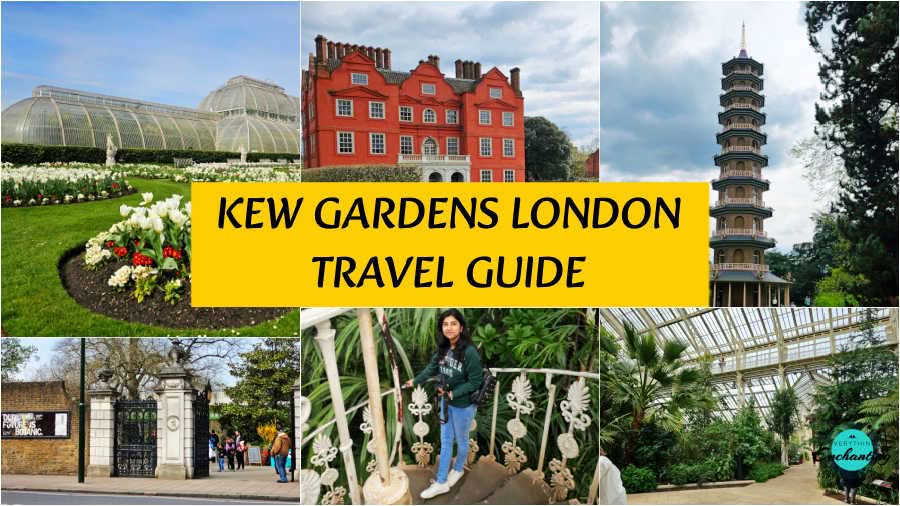
Summer is the perfect time to explore the parks and gardens of the UK, and Kew Gardens in London is one place that truly comes alive during this season. The herbaceous borders are at their peak, roses are in full bloom, giant waterlilies float across the ponds, and the extensive lawns become perfect picnic spots under the summer sun. Kew also hosts seasonal exhibitions and outdoor events during this period. If you’re planning to visit this UNESCO World Heritage Site soon, this Kew Gardens guide is for you!
But first, tell me, are you a summer person or a winter person? I’m a summer person, although I absolutely hate heatwaves! Without any further ado, let me share everything you need to know before your visit, from the best things to see and the different entrances to practical tips, seasonal highlights, and my own personal experiences exploring this incredible botanical garden 😍.
Kew Gardens London Travel Guide 2026:
How to Reach Kew Gardens London:
It is situated between Richmond and Kew stations. There are various travel options to reach the Kew Gardens either by train, bus, taxi, or private car.
From Milton Keynes:
- Train Route:
- Milton Keynes Central → London Euston (~35–50 min)
- Then Underground:
- Northern/Victoria Line → change to District Line
- Get off at Kew Gardens Station
- Total travel time: ~1.5 to 2 hours
From Central London:
- District Line → Kew Gardens Station (2 min walk to Victoria Gate)
- Overground → also stops at Kew Gardens Station
By Bus:
- Routes: 65, 110, 237, 267, 391 stop nearby
By Car:
- Limited parking near Brentford Gate
- Congestion Charge may apply depending on route
📌 Address: Richmond, London TW9 3AE, United Kingdom.
About Royal Botanic Gardens, KEW London (Review):
Kew Gardens, a UNESCO World Heritage Site, is one of the world’s leading centres for botanical research and conservation. It covers approximately 326 acres of landscaped gardens and scientific collections. Established in 1759 and developed under Princess Augusta, it became a global botanical research hub in the 19th century.
I have visited Kew Gardens in different seasons, including spring and winter, but I have to admit, summer has a special charm of its own. Even though I firmly believe summer is one of the best times to visit Royal Botanic Gardens, I’d highly suggest avoiding the heat wave period because of skin and health concerns. Trust me, if climbing the Great Pagoda, Treetop Walkway and Glasshouse explorations are on your wish list, you better choose a pleasant day!
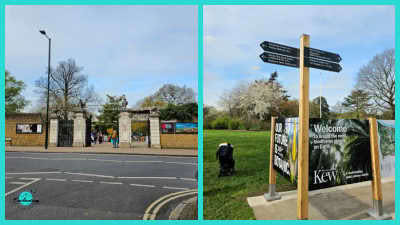
Kew Gardens features a collection of seasonal floral landscapes across zones. So, I’d recommend that you visit these gardens early in the morning. We thought weekdays would be quieter and less crowded than weekends. But despite arriving early at Kew on a weekday, we had to wait in a long queue! The ticket booking counters are located right near the Victoria Gate entrance. You can book tickets on site but we pre-booked our tickets online, as always. The security management team at Kew is helpful too.
Ticket Prices:
(Prices may fluctuate slightly seasonally or for events)
- Adult: £20 – £22
- Concession (students/seniors): £18 – £20
- Child (4–15): £6 – £7
- Family tickets available (~£45–£55 range)
- Under 4: Free
- Members: Free entry
Please note, it is NOT free for National Trust members, as Kew is managed independently.
Opening and Closing Times:
- Gardens Open:
- Daily from 10:00 AM
- Closing:
- Winter (Nov–Jan): ~3:15–4:15 PM
- Spring (Feb–Mar): ~5:00 PM
- Summer (Apr–Aug): ~6:00–7:00 PM
- Autumn (Sep–Oct): ~5:00–6:00 PM
- Glasshouses:
- Usually open from 10:00 AM until 1 hour before garden closing
👉 Last entry typically 1 hour before closing.
ALSO READ: A Visitor’s Guide to Natural History Museum London
Which season is the best to visit Kew Gardens:
It’s quite hard to answer because each season brings a new variety to the Kew Gardens. During Spring, you’ll see cherry blossoms, Magnolias, Daffodils, Tulips, Bluebells and rhododendron flowers. In summer, you’ll come across Roses, Agapanthus, Lavender, Salvias, Coneflowers, Rudbeckias, Giant waterlilies, Ornamental grasses, full leafy tree canopies and productive kitchen gardens along with various summer activities and exhibitions. Winter offers bare tree architecture, evergreen collections, warm victorian glasshouses, most popular seasonal ‘Christmas light trail’ (when scheduled) and architectural views.
Which Kew Gardens gate is the best among four entrances?
It completely depends on which spots you want to visit first! We always chose Victoria Gate and found it pretty easy and convenient.
Kew Gardens has four public pedestrian entrances: Victoria Gate, Elizabeth Gate, Lion Gate and Brentford Gate. We always entered via Victoria Gate to the Kew Gardens.
If you enter through the most popular Victoria Gate, located closest to the Kew Gardens Underground station, it places you right in the bustling heart of the estate.
👉🏻 Immediate Highlights: The majestic Palm House and its surrounding Rose Garden sit directly ahead of you across the pond.
👉🏻 Other Nearby Spots: The towering The Hive installation, the Princess of Wales Conservatory (home to the giant summer waterlilies), and the start of the vibrant Great Broad Walk Borders.
👉🏻 Closest Cafe: Victoria Plaza Café (right at the gate) and the Botanical Brasserie.
The Elizabeth Gate (The Historic & Quiet North Entrance) is situated on Kew Green. This gate is best if you are arriving by bus or parking near the green. If you enter via this gate, it immediately immerses you in royal history.
👉🏻 Immediate Highlights: The bright red Kew Palace, the fragrant 17th-century Queen’s Garden, and the bursting summer crops of the Royal Kitchen Garden. You’ll also see the newly developed climate-focused landscape -Carbon Garden.
👉🏻 Other Nearby Spots: The Nash Conservatory and the sweeping Princess Walk path.
👉🏻 Closest Cafe: The Orangery (perfect for a historic lunch setting).
The Lion Gate (The Pagoda & South Woods Entrance) is located at the far southern tip of the gardens. It is closest to Richmond station and is ideal for a quieter, more nature-focused start.
👉🏻 Immediate Highlights: The spectacular, multi-storey Great Pagoda towering over the trees.
👉🏻 Other Nearby Spots: The Japanese Landscape (featuring the traditional Chokushi-Mon gateway), the Ruined Arch, and the quiet, shaded Arboretum woodland walks.
👉🏻 Closest Cafe: Pavilion Bar and Grill (great for summer outdoor dining).
The Brentford Gate (The Riverside & Family Entrance) is positioned on the western edge along the River Thames. This gate features a large dedicated car park and is highly tailored for families.
👉🏻 Immediate Highlights: The massive Children’s Garden (an interactive nature playground) and the Syon Vista river views.
👉🏻 Other Nearby Spots: The Temperate House (the world’s largest Victorian glasshouse) and the elevated Rhizotron and Treetop Walkway.
👉🏻 Closest Cafe: Family Kitchen & Shop.
ALSO READ: A Day Trip to Hitchin Lavender & Sunflower Farm From Milton Keynes (Review)
Major Attractions At The Royal Botanic Kew Gardens London (Things to See & Do):
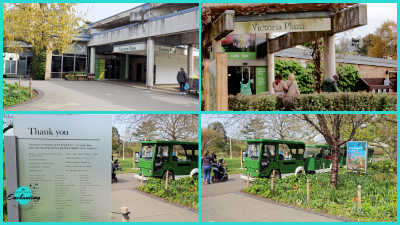
Once you cross the ticket zone, there is the Victoria Plaza Cafe, offering breakfast, sandwiches, and hot drinks. There is also a Victoria Plaza gift shop. After exploring the gardens, we stopped by the plaza in the evening. I bought a nice hat for me from the store and had some delicious sandwiches and muffins at the plaza cafe.
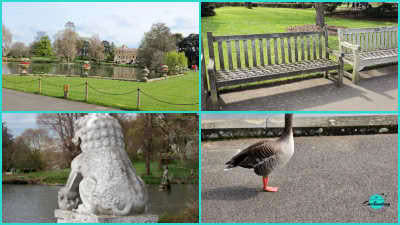
We headed straight toward the Palm House upon stepping inside the garden. Along the way, you’ll find a large, beautiful pond featuring a historic pair of stone Chinese Guardian Lion statues (often called Foo Dogs), resident ducks and geese, and scenic viewpoints.
One thing I loved about the Kew Gardens is there are plenty of benches scattered around the gardens to sit, relax, or enjoy the natural beauty. During spring and summer, the entire area gets adorned with seasonal floral displays like roses and tulips.
Our first stop at the Kew Gardens was the iconic Palm House, London’s famous indoor rainforest 😍!
Palm House:
The Palm House is one of the most famous attractions at Kew Gardens and a true Victorian masterpiece. Built between 1844 and 1848, it was designed by architect Decimus Burton and engineer Richard Turner.
The first thing that always catches my attention is the architecture! Its curved iron and glass structure was inspired by shipbuilding techniques, giving it the appearance of an upside-down ship’s hull. Today, the Palm House is recognised as the world’s most important surviving Victorian iron-and-glass glasshouse.
Once you step inside, you’ll find yourself in a warm, humid tropical rainforest where the temperature is kept at a minimum of 18°C. We visited on a cold, windy day yet we felt the heat inside this indoor rainforest. I can’t imagine what it would feel like during the heatwave period!
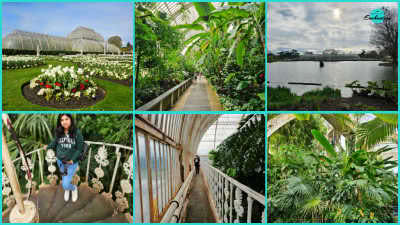
The Palm House is home to an extraordinary collection of tropical plants from around the world, including the rubber tree, cocoa tree, African oil palm, and many rare palms that are endangered in the wild, such as Ravenea moorei from the Comoros and Pelagadoxa henryana. All my Botany science friends would love this place!
One of its greatest treasures is the world’s oldest potted plant, an ancient cycad called Encephalartos altensteinii, which has been growing at Kew since 1775. You can also spot the fascinating Suicide Palm (Tahina spectabilis) from Madagascar, a rare species that flowers only once after around 50 years before dying, along with other prehistoric cycads whose ancestors existed long before the dinosaurs.
There are two beautiful spiral staircases inside the Palm Glasshouse. They are located on opposite sides of the central gallery and lead up to the elevated gantry or walkway. Because the staircases are tight and only wide enough for one person, they operate as a strict one-way system: one staircase is used for ascending, and the other is used for descending. The views of the glasshouse from the top are well worth it. I took many photos from the staircase.
During the winter season, the Palm House serves as the stunning centerpiece of the annual ‘Christmas at Kew’ light trail (a specially ticketed, after-dark event). The Palm House display is traditionally saved as the spectacular final showstopper of the entire 3-kilometre walking trail. I shared that light show on my channel a while ago, you can watch it here.
The pond in front of the glasshouse comes alive with water jets, colorful lighting and festive music. Beams of changing neon and jewel-toned lights shoot across the sky and reflect off the building’s historic iron and glass frame, showcasing its beautiful curves against the night sky. Don’t miss this enchanting show!
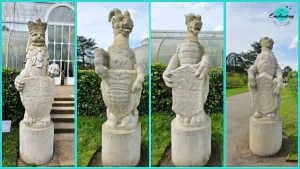
There are also 10 Portland stone statues, famously known as the Queen’s Beasts lined up directly in front of the Palm House. They represent the heraldic lineage and royal ancestry of Queen Elizabeth II.
According to recent social media news, the Kew management team is going to renovate the Palm House next year (2027), which means this place will be closed for several years. If you’re planning to visit this glasshouse at Kew, don’t wait!
The Palm House is open daily from 10:00 am to 5:00 pm and offers an unforgettable glimpse into the rich biodiversity of Earth’s tropical rainforests. Well, you can watch the entire Palm House tour on my channel, here.
The Rose garden is situated right behind the Palm house. The garden holds more than 150 different species and cultivars of mixed shrub roses. If you are a fan of roses, then definitely check it out.
ALSO READ: Tulleys Tulip Fields Hertfordshire Review
Temperate Glasshouse:
The Temperate House at Kew is massive. It is actually the largest Victorian glasshouse on Earth! It’s quite spacious and airy too than the Palm House.
It was built back in the 1860s and is twice the size of the nearby Palm House. After a major five-year restoration, it reopened to show off these incredible plants in all their glory.
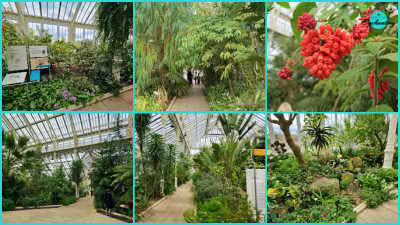
Inside, you will find over 10,000 plants from temperate places like Africa, Asia, Australia, and the Americas. It is a safe haven for some of the rarest and most threatened species on the planet, protecting everything from tiny remote island flowers to towering mountain trees. If you visit during spring or summer, you’ll find numerous pretty flowers across all the galleries.
There is a beautiful rock waterfall situated in the New Zealand zone of the glasshouse, featuring an open, shallow pool flanked by raised, rugged rockwork. It adds such an energetic, immersive acoustic element to the building, allowing you to hear the rush of water as you explore the ground paths or look down from the overhead spiral staircases.
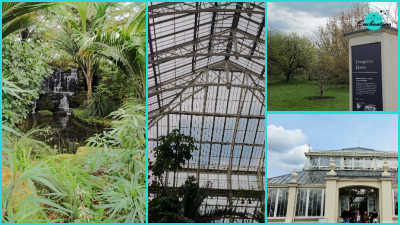
Similar to Palm House, there are two historic spiral staircases located inside the Temperate House. The cast-iron spiral staircases are situated in diagonal corners of the largest central hall of the glasshouse. From the top gallery balcony walkway, you can look down at the tree canopy, see the waterfall from above, and get a close-up look at the intricate Victorian ironwork.
If you visit Temperate House between now and January 2027, you are in for an extra treat 😍. The glasshouse is hosting a landmark exhibition called ‘Henry Moore: Monumental Nature’. You can see the artist’s giant, famous sculptures sitting right among the greenery inside the house and out on the surrounding lawns. It is a beautiful mix of art and nature that you won’t want to miss.
If you’re wondering what the difference is between the Palm House and the Temperate House, then just know that the Palm House is a hot, humid tropical rainforest, while the massive Temperate House covers cooler climates as well!!
When we visited Kew Gardens during Cherry Blossom season, the ‘Cherry Walk’ trail that led us toward the Temperate House was dotted with colorful tulips and pink cherry blossom trees. That walkway makes for such a stunning photo op! You can find lush cherry blossom plants behind the glasshouse as well once you exit the building and walk toward the Great Pagoda.
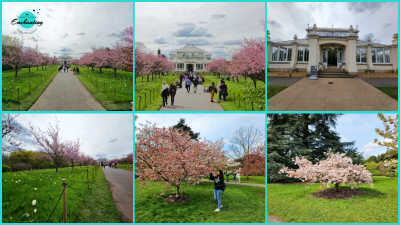
In summer, Cherry Walk transforms into a tunnel of lush green tree canopies and summer-flowering perennials though! Watch the temperate House full tour on my channel, HERE.
Nearest Entrance: Lion Gate (it’s the closest walk).
Opening Times: Daily, 10am to 5pm.
ALSO READ: Holland Park London Review | What to See, Do & Know Before You Visit
The Great Pagoda:
The Great Pagoda at Kew is a fascinating piece of history. Finished in 1762, this 163-foot tower was built by architect Sir William Chambers as a gift for Princess Augusta (mother of King George III) . It was designed to give British people a look into Chinese culture, taking inspiration from the famous porcelain pagoda in Nanjing.
The Pagoda is less than a five-minute walk from the Temperate House and along the way you will see the tower rising above the trees as soon as you walk out. The Chinese tower structure with 80 eye-catching, colorful, wooden dragons looks majestic from afar! Interestingly, traditional pagodas usually have an odd number of floors, but this one breaks the rules with ten.
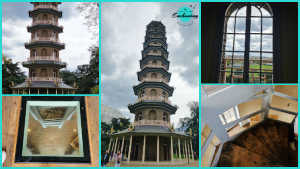
Climbing up the 253 steps to the top balcony for some of the best views over London is no joke, especially during summer and if you have knee issues! I have to admit, I didn’t find the climb particularly worthwhile 😒. Along the way up, you can stop at different floors to read about the history of the building. You will even find out how the Royal Family used the space, and see the repaired holes left behind from World War II when British bombers used the empty floors to secretly test their inventions.
That’s all!! You can’t fully open the windows or take in uninterrupted views.
Since it is a fragile, 18th-century historic building, the windows at the very top are kept mostly closed and restricted to just a small opening or peephole for safety and preservation. And because you cannot open the windows fully or step outside, it can be quite tricky to line up a camera or phone to take a clear photograph of the London skyline.
Plus, the top-floor area around the central spiral staircase is very small, that’s why you often have to take turns peeking through the available window gaps.
Because the staircase is narrow, climbing the tower requires a separate timed-entry ticket in addition to your Kew Gardens admission. These cost around £5 for adults and can be booked online or at the gate.
Keep in mind that the climb is quite steep. For safety reasons, anyone with health conditions should skip the climb, and children under five are only allowed on the ground floor. Large backpacks are also not allowed inside!
There is a beautiful permanent exhibition on the ground floor that features mechanical interactive displays known as automata. Instead of using modern digital screens, the artist and designers deliberately used the traditional, hand-cranked mechanical boxes to match the 18th-century historic feel of the building. You do get a chance to turn the handles and try the automata yourself. Watch my video to see how it actually works!
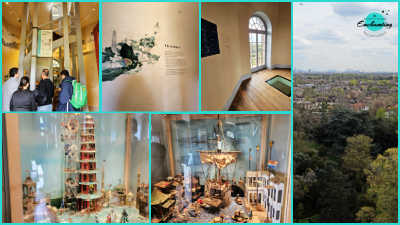
One automaton shows Sir William Chambers (the Pagoda’s architect) on his travels to Canton (Guangzhou), China, where he studied East Asian architecture. The second mechanical display shows the British royal family strolling through Kew Gardens, admiring the unique buildings and ‘follies’ Chambers designed for them.
When you stand on the ground floor looking at the mechanical automata, the walls around you display large, hand-drawn murals and portraits of the key historical figures behind the Pagoda like Princess Augusta, her son King George III, and Sir William Chambers, the brilliant royal architect who designed the Pagoda. Alongside the portraits, you will see a massive, detailed mural drawn by French illustrator Lucille Clerc and landscape paintings as well.
The Pavilion Bar and Grill sits right between the Temperate House and Great pagoda if you want to grab lunch or a coffee, and the closest park exit is Lion Gate, just five minutes away.
While you are in the area, you can also check out the Chokushi-Mon (Japanese Gateway) just a two-minute walk away, or head over to see the traditional 19th-century Minka House nestled in the Bamboo garden.
- Nearest Entrance: Lion Gate
- Opening Times: Open daily until 27 September 2026, from 11:00 am to 4:00 pm.
While you are walking between these big landmarks, you will actually be walking right through Kew’s massive Arboretum. Rather than just a generic woodland, this is a giant living museum of trees that covers over two-thirds of the entire 300-acre estate.
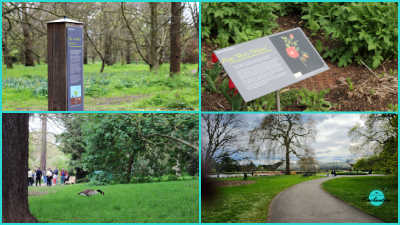
The Arboretum acts as a sanctuary for endangered trees, keeping their genetics safe and helping with global forestry research.
At the Kew Gardens London, the trees are organized geographically. As you walk across the southern and western lawns, you will pass everything from giant North American redwoods to delicate Japanese cherries. These are Kew’s oldest surviving trees, planted as early as the 1700s. Look out for the famous 260-year-old Maidenhair tree and an ancient Caucasian Elm.
ALSO READ: Chelsea In Bloom – London’s Most Beautiful FREE Floral Festival
Davies Exploration House (formerly known as Evolution House):
The Davies Exploration House is situated right behind the Temperate House. Built in 1952, this modernist, mid-century glasshouse was originally called the Evolution House or the Australian House. Today, it focuses on the incredible plants of Australia and how they adapt to some of the toughest climates on Earth.
Interestingly, the building’s architectural design is also quite different from Kew’s other glasshouses. Unlike the grand Victorian style of the Temperate House, this building was built with a lightweight, post-war aluminium frame. If you look up, you will notice there are no vertical columns or pillars blocking your view. Instead, large arched trusses span the entire room.
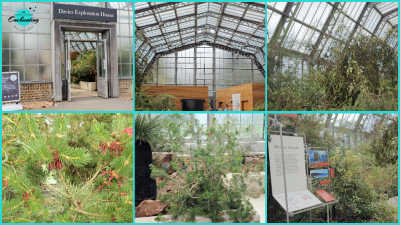
I found this place peaceful and less crowded. The plant collection is amazing too! It houses a collection of iconic Australian flora, including sweet-smelling eucalyptus trees, wattles, and paperbarks. There are also leathery-leaved shrubs that have evolved to survive intense heat and bushfires, alongside ancient tree ferns that make the space feel like a prehistoric landscape.
Marianne North Gallery:
On our way to the Treetop walkway, we stopped by the most popular Marianne North Gallery. This famous gallery houses over 800 stunning botanical paintings from a single Victorian artist, Marianne North. She personally curated the gallery back in 1882 and that’s why the paintings are still arranged exactly as she intended.
Inside the gallery, the walls are covered from floor to ceiling with vibrant oil paintings that are tightly stacked by region, meaning you can walk from the plants of Jamaica to the flora of Japan, Brazil, and Australia in just a few steps. We spotted our Indian plants & herbs paintings too!
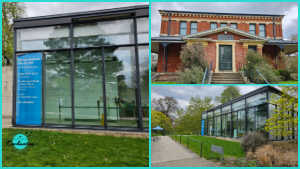
This gallery actually transported me to my college days. During bachelor’s degree course, we Botany students would study and collect plants, press them and illustrate them in our research papers. I miss those days terribly now 😭!
Before you leave, make sure to visit the side exhibition room. It features displays about her life and travels, along with pull-out drawers where you can see real dried specimens from her journeys, like giant bean pods and pitcher plants.
Please keep in mind, you are not allowed to take photos or record videos of any kind inside the building. It houses historic, original 19th-century oil paintings that are highly sensitive to light damage, flash deterioration, and climate shifts.
Shirley Sherwood Gallery:
Right next door to the Marianne North Gallery is the Shirley Sherwood Gallery of Botanical Art. Opened in 2008, this sleek, modern pavilion is the first public gallery in the world dedicated entirely to plant-focused art.
The climate-controlled space brings together two distinct collections: the Shirley Sherwood Collection which features incredibly detailed, modern botanical illustrations chosen from Dr. Sherwood’s personal collection and the Kew Archives, acollection of highly precise historical drawings of plants and fungi selected from Kew’s massive master archive of 200,000 images.
You can find it in the south-central area of Kew, located directly opposite the eastern side of the Temperate House.
ALSO READ: 6 Best National Parks in the UK to Visit This Summer
Treetop Walkaway:
The Treetop Walkway is tucked away in the north-west zone of the gardens, right inside the Arboretum. It is a short walk from both the Davies Exploration House and the Waterlily House (now closed for restoration work), making it easy to drop by.
Designed by the same architects behind the London Eye, this 200-meter-long walkway sits 18 meters above the ground. The bridge is made of weathered steel that naturally blends in with the branches.
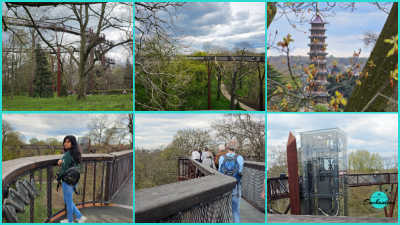
To get to the top, you need to climb up a 118-step spiral staircase. If you use a wheelchair or have mobility needs, there is a dedicated glass lift available so you do not have to miss out on the views.
As you walk, you’ll notice the platform gently flexing and moving. This is an intentional engineering feature called the treetop sway, designed to mimic how the surrounding trees move in the wind. Along the path, there are also interactive panels that explain how trees interact with fungi.
Walking along it puts you right inside the woodland canopy, giving you a great vantage point over the sweet chestnut, beech, and horse chestnut trees.
From the bridge, you can spot birds, insects, and lichens that you usually cannot see from the ground.
Location: Grid E6 (inside the Arboretum).
Kew’s Children’s Garden:
Kew doesn’t only offer scenic views, rare plants, and glasshouses for adults. It also offers activities and gardens to entertain the kids! There is a huge playground designed around the four elements plants need to grow: Earth, Air, Sun, and Water.
The Air Garden features trampolines, hammocks, and periscopes tucked beneath massive, mature Eucalyptus trees.
Also, don’t miss the 4-metre-high aerial walkway wrapped around a 200-year-old English Oak right in the centre of the playground!

The Family Kitchen & Shop is located directly next to the Children’s Garden inside the Royal Botanic Gardens, Kew. This family-friendly destination serves stone-baked pizzas, sandwiches, and ice cream, and features a gift shop, a baby feeding room, and sensory play areas that teach children about how food is grown. We ordered vegan pizzas and ice cream for ourselves. The gift store is nice and has a variety of gifts and souvenirs for the visitors to shop.
Kew Royal Palace:
The Kew Royal Palace was on my wishlist ever since I watched The Queen Charlotte series on Netflix.
King George III, famously known as “Farmer George,’’ acquired the palace entirely to accommodate his expanding family, spending summers there with Queen Charlotte and their 15 children. However, later the palace shifted from a happy home to a tragic retreat when the King’s famous bouts of delusion worsened.
Unlike other palaces that were heavily modernised, Kew Palace was sealed off shortly after Queen Charlotte died there in 1818. It acts as a perfect, frozen capsule of late-Georgian domestic life.
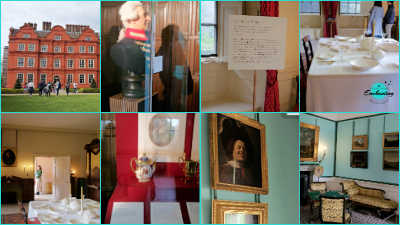
Kew Palace has four floors and it takes about one hour to fully explore the palace. The ground floor served as the domain of King George III. It is fully restored to its 1804 appearance and contains the primary eating and leisure spaces. You’ll find the King’s Dining Room, the Pages’ Waiting Room, the King’s Breakfast Room and the King’s Library.
The first floor functions as the beautifully restored royal apartment level for Queen Charlotte. It features vibrant green flocked wallpaper and early-19th-century chintzes. You’ll see Queen Charlotte’s Bedroom, The Queen’s Drawing Room, Princess Elizabeth’s Bedroom, the King’s Library (Anteroom – a secondary study area), and small inner and outer dressing chambers split by a sash window, typically used by personal assistants.
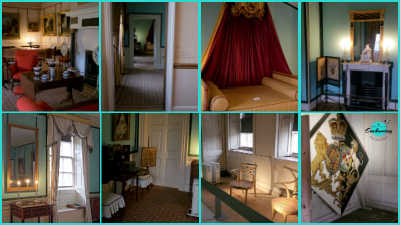
The second floor is purposefully left unrestored to display 200 years of structural layers, including early-19th-century paint finishes and original gothic fireplaces. This level served as the living quarters for George III’s daughters. You’ll find Princess Augusta Sophia’s Bedroom and Princess Amelia’s Bedroom.
The top level of the palace is an expansive, unvarnished attic space that is generally closed to the general public, except via specialized Hidden Spaces Tours.
The main Royal Kitchens are located in a separate, detached building directly next to the palace grounds to prevent fire and food smells from entering the royal living areas. These 200-year-old kitchens have been left largely untouched since 1818, featuring old roasting jacks, charcoal stoves, and copper scullery items. It takes about 15 to 20 minutes to cover the kitchens.
The Queen’s garden is a small, 17th-century style herb garden located directly behind the palace. This formal parterre garden is enclosed by immaculately clipped box hedges.
The garden was specifically created to honour the historic queens of Kew, such as Queen Caroline and Queen Charlotte, who loved botany. It was officially opened to the public by Queen Elizabeth II in 1969. The space houses some of the oldest outdoor sculptures at Kew Gardens, creating a living open-air museum.
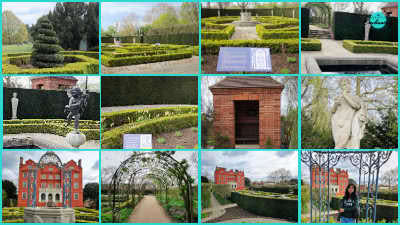
The air here smells amazing during summer. The garden features classic 17th-century scented summer herbs and plants like lavender, hyssop, sage, santolina (cotton lavender), and thyme.
You’ll find the Laburnum Allée (a magnificent arched pergola tunnel), and the “Boy with a Dolphin” Fountain (replica of Andrea del Verrocchio’s famous Renaissance sculpture). A little climb from the Queen’s Garden and you’ll find the Gazebo & Mount. A small historic viewing mount tucked in the corner, crowned with a classic stone rotunda overlooking the River Thames. The views of the palace and surrounding areas from the mount are simply mesmerizing!
Kew Palace is located in the northern section of the Royal Botanic Gardens, Kew, close to the south bank of the River Thames. The nearest entrance is the Elizabeth Gate and it sits right next to the Orangery restaurant. It is just a short walk north of the Princess of Wales Conservatory.
Entry to Kew Palace and the Royal Kitchens is free with your general admission ticket to the Royal Botanic Gardens, Kew. It’s open daily from 11:00 AM to 4:30 PM (last entry at 4:00 PM) until 27th September 2026.
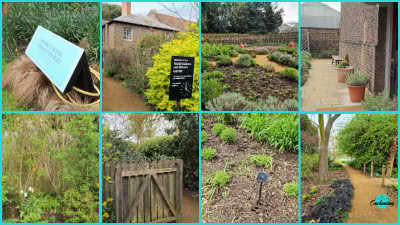
The Kitchen Garden is situated adjacent to the Royal Kitchens block, right next to the main Kew Palace building. This historical garden features 18th-century vegetable varieties, herbs, and fruits that mirror what the royal chefs would have prepared for King George III and his family between 1789 and 1818. The garden also grows summer crops, sunflowers, cornflowers, and edible blossoms. Even though I couldn’t guess all the plants or herbs, that small royal garden really impressed me!
We couldn’t explore Queen Charlotte’s Cottage because we ran out of time. But if you are interested in visiting the historical spot, it’s located near the Lion Gate and main glasshouses. Don’t miss the beautiful print room and tea room of the cottage!
The nature reserve surrounding the cottage features a 300-year-old oak woodland that erupts with a spectacular carpet of violet bluebells during the spring. The adjoining fields once housed the Queen’s exotic royal menagerie, featuring English history’s first-ever kangaroos, buffaloes, and black swans.
Watch the full Kew Palace tour on my channel, HERE.
ALSO READ: Park Plaza Victoria London Hotel Review
Great Broad Walk:
On our way toward The Princess of Wales Conservatory, we crossed the Great Broad Walk! It is the formal promenade that serves as the central spine of the Royal Botanic Gardens, Kew. It is also one of the most photographed areas of Kew during summer.
Originally designed in 1841 by the legendary Victorian landscape architect William Nesfield, it was created as a grand formal avenue to link the garden’s major landmarks. Also, it is widely celebrated as the longest double herbaceous flower border in the UK and potentially the entire world.
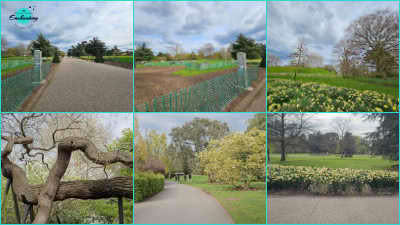
From the palace area, the broad path leads you straight toward the Palm House Pond and the Victoria Gate entrance. The Orangery restaurant is nearby in case you want to enjoy some refreshments during the day outing.
Along the walk, you’ll see the massive borders are broken up into eight vast circular lawn islands, each of which highlights different plant families. Depending on when you stroll down the path, the visual display completely changes. You will see cool, crisp blues and whites during the spring, which explode into fiery golds, deep reds, and purples by late summer.
The walkway remains flanked by grand, historic trees including Cedrus deodara (Deodar cedars). Walking down the path is a wonderful sensory experience too! During the summer season, you’ll spot Echinacea (Coneflowers), Lavender, Agapanthus (African lily), Salvias, Rudbeckia (Black-eyed Susans), Helenium (Sneezeweed), Kniphofia (red hot pokers) flowers and Ornamental Grasses. In Spring, you’ll find Giant Alliums (Ornamental Onions), Tulips, Camassia (Wild Hyacinths), Euphorbia (Spurge), Fritillaries and Forget-me-nots (Myosotis) flowers.
The HIVE Installation:
The Hive attraction is located on a raised mound next to the Great Broad Walk and the Princess of Wales Conservatory.
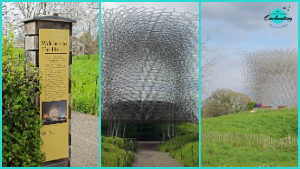
The towering aluminium installation sits atop a doughnut-shaped grassy mound surrounded by a wildflower meadow. You need to climb this raised mound and cross a small bridge to enter the interior of the immersive structure.
Once inside the mesh structure, you’ll experience 1,000 flickering LED lights and an orchestral symphony in the key of C. The entire audio-visual experience is triggered in real-time by the physical movement and vibrations of live honeybees living in Kew’s nearby research colonies. This is one attraction you shouldn’t miss.
ALSO READ: 7 Best Places To Visit In The UK In Spring
The Princess of Wales Conservatory:
Next to the Hive is tthe Princess of Wales Conservatory, a labyrinthine glasshouse, that features ten different computer-controlled climate zones under one roof.
This glasshouse was opened by Diana, Princess of Wales, in 1987, but its name officially pulls double-duty. It also commemorates Princess Augusta (mother of King George III), founder of Kew Gardens in 1759. The Princess of Wales Conservatory is fully wheelchair accessible!
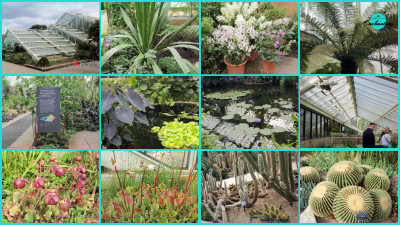
The glasshouse features the Wet Tropics (Rainforest Zone), the Dry Tropics (Arid Desert Zone), the Orchid Galleries (Two Separate Warm & Cool Zones), the Carnivorous Plant Zone, the Aquatic & Giant Waterlily Ponds and the Fern House.
In the steamy, high-humidity central rainforest zone, you’ll find towering banana plants, massive wild gingers, and giant bromeliads that naturally catch pooling water in their leaves. The Warm Orchid Zone houses specimens from low-lying jungles, while the Cool Orchid Zone replicates damp, misty cloud-forest cliffs.
In the carnivorous plant section, you’ll see dense colonies of Venus flytraps snapping shut on insects, hanging pitcher plants (Nepenthes) filled with digestive enzymes, and sticky sundews glistening under the glass.
In the aquatic area, you’ll see massive, circular Victoria amazonica (Giant Waterlilies) floating on the pond surface, with leaves strong enough to hold the weight of a child. Below them, you can watch several exotic tropical fish darting through the dangling plant root systems.
In the Fern house, you’ll see primitive, ancient tree ferns that have remained largely unchanged over millions of years since the era of the dinosaurs. And in the last dry Arid zone, you’ll find a massive collection of multi-tiered, spiky cacti, rare desert succulents, and bizarre Madagascan Baobab trees adapted to handle months of zero rainfall.
Not just these exotic plants, the main highlight of this glasshouse is the Attenborough Time Capsule. Sir David Attenborough buried the secret time capsule containing seeds of crucial food crops and endangered wild plants safely under the building’s concrete foundations in 1985. The capsule is scheduled to be dug up and opened 100 years later in 2085.
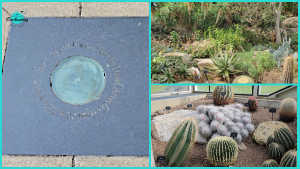
You can walk up to the capsule stone set into the floor of dry/arid (desert) zone of the glasshouse near the cacti and succulent collection.
There is a Red Maple tree (Acer rubrum) dedicated to Princess Diana’s memory. This memorial tree is planted in the grassy lawn area directly outside the conservatory. Right next to it, you can also spot Kew’s famous Weeping Beech (Fagus sylvatica), which forms a massive, cave-like canopy of hanging leaves.
Watch the full Princess of Wales Conservatory on my channel, HERE.
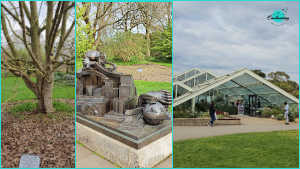
The Carbon Garden is the new major feature of Kew for 2026. This newly developed climate-focused landscape is located immediately behind the Princess of Wales Conservatory near Ginkgo Lane. It features a central, mushroom-inspired wooden pavilion designed by Mizzi Studio, over 6,500 climate-resilient plants, and 35 new trees. The main highlights include – climate-stripe inspired planting design, mixed perennials and seasonal bulbs, and educational storytelling about carbon cycles.
The nearby Waterlily House is closed now for restoration work. However, you can explore the Rock Garden, Bamboo Garden and the Grass Garden that are located close to the Princess of Wales Conservatory.
The Rock Garden features plants from mountainous regions, with bright flowering cushions tucked among the rocks. The Bamboo Garden feels wonderfully peaceful, with dense plantings of Asian bamboo species creating a lush, almost secluded atmosphere. And in the Grass Garden, you’ll find flowering ornamental grasses swaying gently in the breeze, their soft, feathery plumes adding a dreamy touch to the landscape.
Royal Botanic Gardens, Kew is huge, so it’ll take a full day to explore all the major attractions, especially if you have a knack for plants and photography! The majority of the attractions are fully wheelchair accessible, so if you are visiting with an elderly person or have mobility issues, you can still enjoy wandering around the gardens.
Last year, I visited Cambridge University Botanic Garden which I found quite similar to Kew Gardens. I’ll write about it on the blog soon, stay tuned!
Also, accept my apologies for writing such a lengthy guide. I truly believe that, before visiting a place, especially heritage sites, you must know what things to expect from that place. With a good understanding of its special features, hidden spots and things you can’t miss, you’ll be able to explore the place really well in less time! Otherwise, after some days you’ll realize that you missed a lot of things during your exploration. That’s why I try to add as much information and tips as possible in my travel guides and review posts.
I really hope you find this guide helpful. You can watch the full KEW GARDENS tour on my channel, HERE.
YOU MAY ENJOY READING THESE POPULAR POSTS:
- 5 Best Travel Adapter Converters
- Things to know before visiting the Sheikh Zayed Grand Mosque, Abu Dhabi
- 10 Reasons To Choose Train Travel Over Car Travel
- Gulliver’s Land of Lights Lantern Festival Milton Keynes Review
- Jasmine Indian Restaurant Review, Milton Keynes, UK
- A Walk Around Fred Roche Gardens Review, Milton Keynes
- My Visit To SKY 100 Hong Kong Observation Deck
- My Overnight Stay at Kolkata Airport Retiring Room (Review)
- 10 reasons that indicate booking holidays in advance is a wise choice
- Review of Bella Italia Restaurant, Milton Keynes
- DeRoka Turkish Mediterranean Restaurant Review, Milton Keynes
- Northampton Winter Light Trail Review (Delapré Abbey)
- Namji Xscape Indian Punjabi Restaurant Review, Milton Keynes
- Hotel Suresh Inn Review, Magarpatta, Pune, India
- A Visit To The World’s Tallest Building, Burj Khalifa, Dubai Tips
- Christmas at Kew Festival, London
Have you been to Royal Botanic Gardens KEW in London yet? If yes, please share your experience with me in the comments section below.